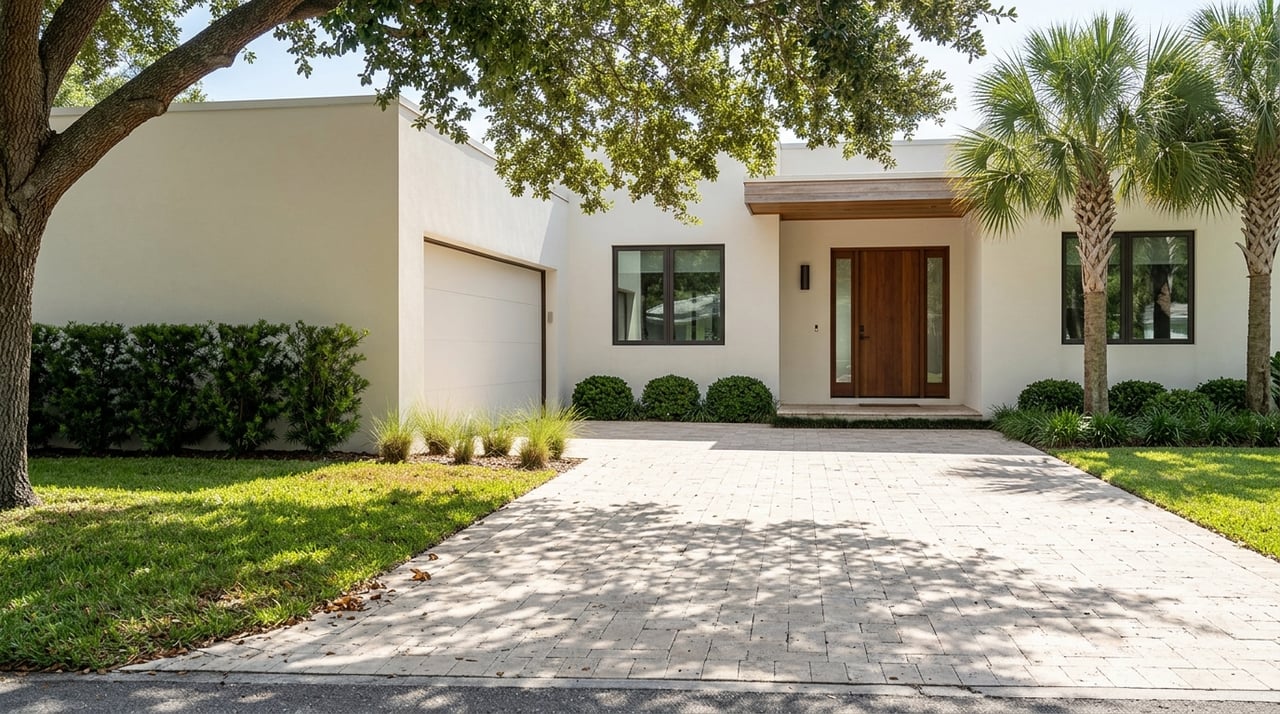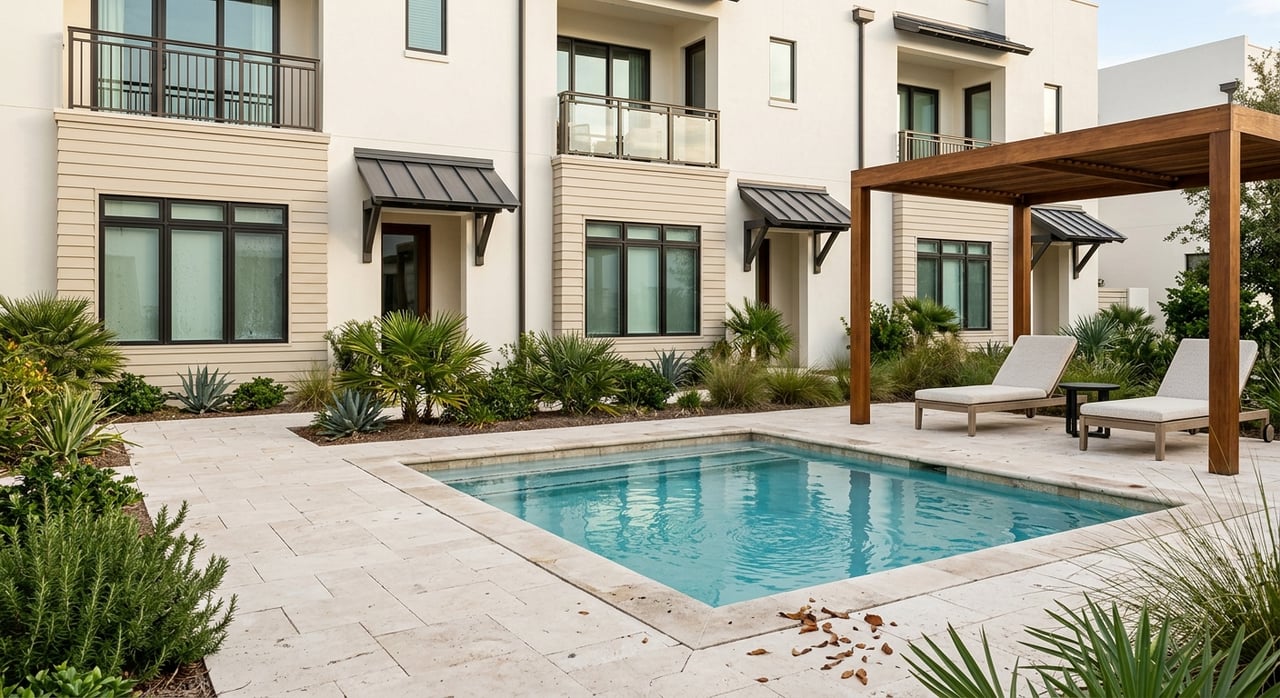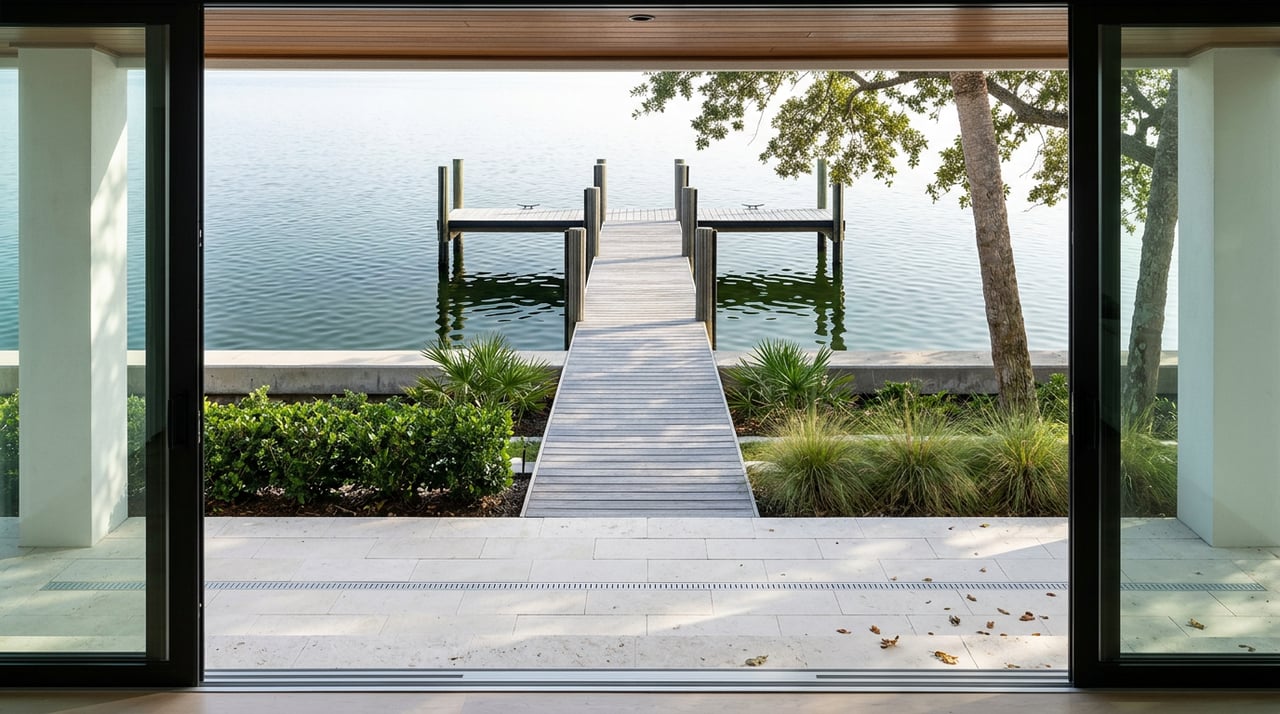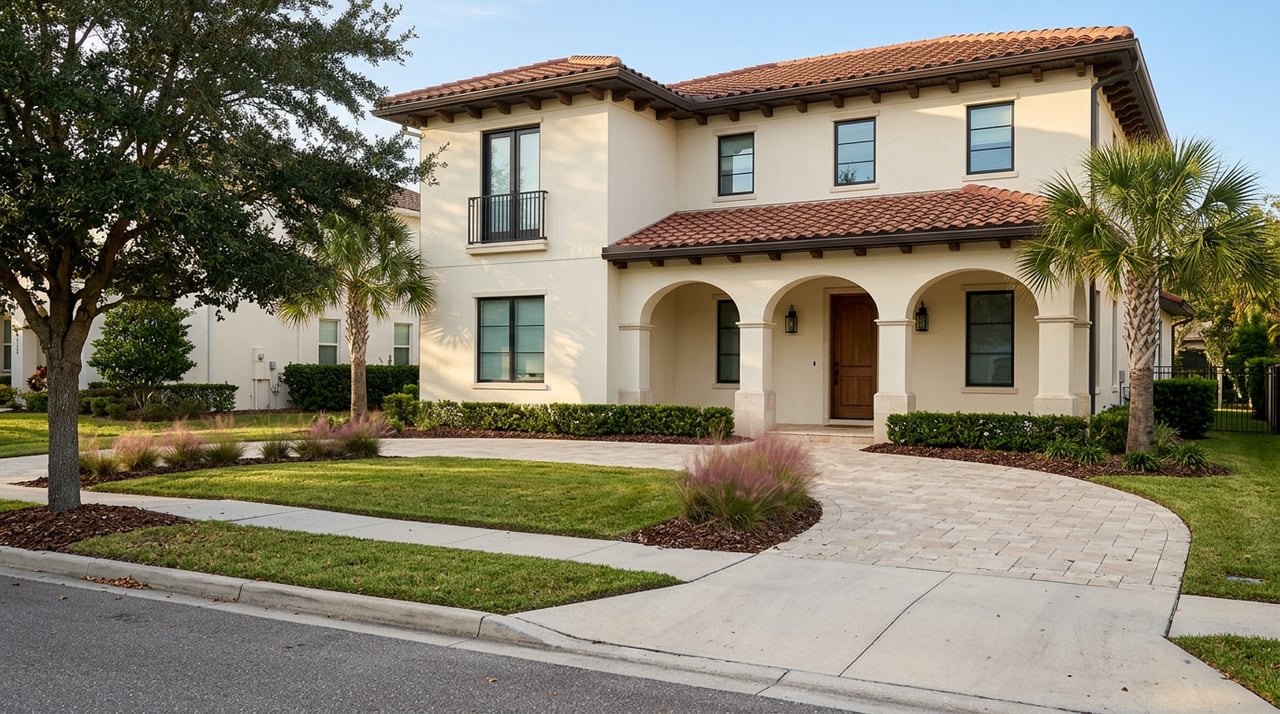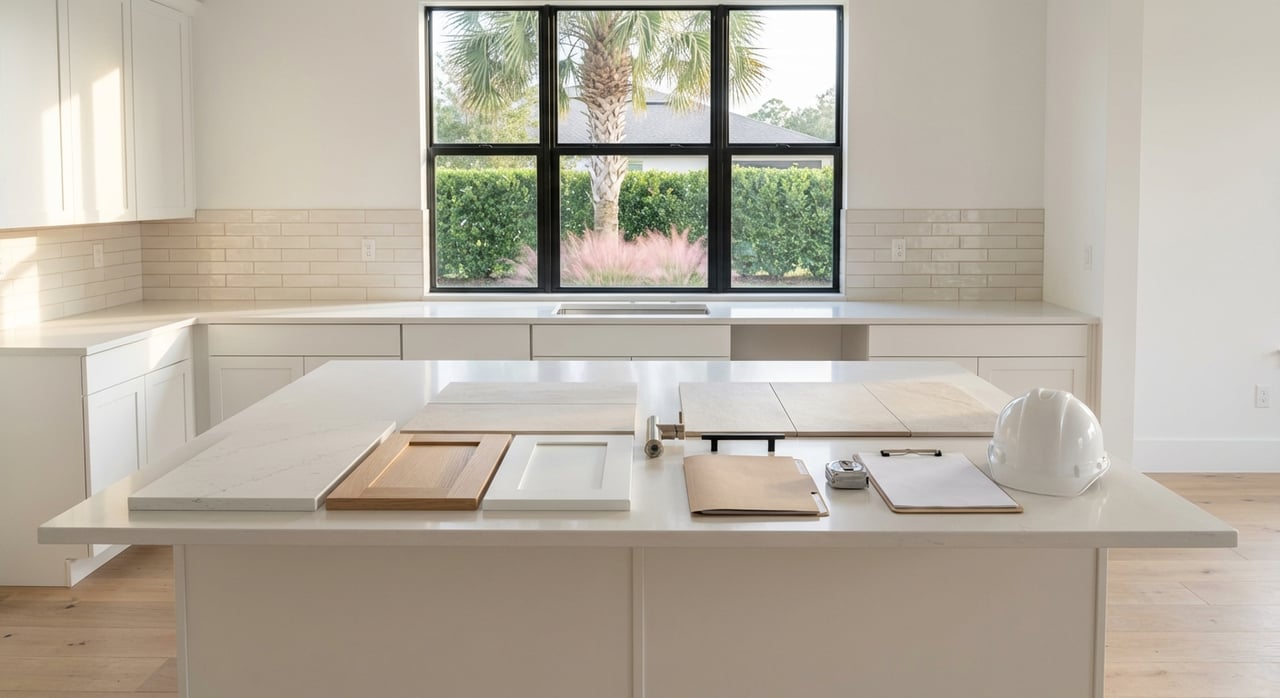
Thinking about building your next home in Hammock Bay but not sure where to start? You are not alone. New construction can feel complex, especially in a large master-planned community with many neighborhoods, builders, and contract details. In this guide, you will learn how Hammock Bay works, how to choose the right lot, what to watch in builder contracts and financing, and how timelines and warranties typically play out. Let’s dive in.
Hammock Bay at a glance
Hammock Bay is a bayfront, master-planned community in Freeport developed by the Jay Odom Group. The community highlights a long list of amenities, including a bayfront clubhouse and dock, multiple pools and clubhouses, a fitness center, sports complex, miles of trails, and a town center with retail and a brewery. You can explore the community and amenities on the official site for Hammock Bay.
Because it is master planned and built in phases, you will see many named neighborhoods and product types, from interior sections to lake-view and bayfront areas like Steamboat Landing. Most phases share common HOA and CC&Rs, and a Community Development District may levy assessments to fund infrastructure. These HOA and possible CDD assessments are normal recurring ownership costs in Hammock Bay and should be part of your budget. You can read about the CDD structure on the Hammock Bay CDD’s overview page.
Who is building where
Builder lineups and active phases change, so verify current availability with the Hammock Bay Sales Center. Recent activity in and around Hammock Bay includes:
- DSLD Homes. Production homes across multiple phases such as Crescent & Symphony, The Trails, Bird Song, Lantern, and Starburst. See a sample community page for Crescent & Symphony at Hammock Bay.
- Holiday Builders. A regional builder with active builds and “follow-the-build” updates that show the typical construction steps and timing. View recent project sequences in Holiday Builders’ follow-the-build series.
- Truland Homes. Presence noted through community listings and model references in prior phases. Confirm current offerings at the sales center.
- D.R. Horton. Product is present in the broader Freeport area based on parcel and community records. Confirm specific phases at the sales center.
For the latest builder roster by neighborhood, start with the Hammock Bay site and select community sections such as The Trails, then connect with the sales center for current maps and inventory.
Lot selection and site specifics
Hammock Bay offers many lot types, each with different pricing and planning considerations:
- Bayfront or gated bayfront (Steamboat Landing)
- Lakefront or pond-view
- Interior and wooded
- Corner and cul-de-sac
- Larger estate-style sections
Lot premiums are common for water views, corners, cul-de-sacs, and estate lots. Ask the sales rep for the current price sheet, what the premium covers, and whether extra site work like tree removal or additional fill is included.
Flood and elevation matter near the bay and coastal wetlands. Confirm each lot’s FEMA flood zone, the base flood elevation, and whether an elevation certificate is available. If a lot is in a Special Flood Hazard Area, most lenders will require flood insurance, which adds to your monthly cost. Also confirm hurricane and wind-mitigation features that may impact insurance.
Hammock Bay phases are subject to CC&Rs and usually have an architectural review process. These rules may control garage placement, porch types, exterior materials, and accessory structures. If you plan a custom build in a section like Steamboat Landing, budget for plan review and any architectural fees.
Utilities and easements also vary by lot. Confirm sewer connection and whether curb, gutter, sidewalks, and streetlights are included or scheduled for later. The CDD typically funds larger infrastructure. Get clarity on timing so your move-in plan matches the development schedule. Learn more about the CDD’s role on the Hammock Bay CDD overview.
Quick lot checklist
Ask the sales rep or your agent to confirm:
- Whether the lot is bayfront, lakefront, or interior
- Lot premium amount and what it includes
- Flood zone, base flood elevation, and any elevation certificate
- CC&Rs, architectural review, and exterior-material rules
- Estimated build start and completion timeline for that specific lot
Budgeting for HOA and CDD
Your monthly or annual ownership costs will likely include HOA dues and, in many phases, a CDD assessment. The HOA supports community operations and amenities. The CDD services bonds that funded roads, utilities, and other infrastructure. Request written estimates from the sales center and the CDD so you can include these recurring costs in your budget. Start with the CDD’s about page and the Hammock Bay site’s neighborhood pages for context.
Contracts, deposits, and financing
New construction contracts are different from resale agreements. Focus on five areas: deposits and escrow, upgrades and selection deadlines, financing and lender incentives, what the builder’s sales team represents, and warranty and service.
Deposits and escrow in Florida
Builder contracts often call for deposits around 5 to 10 percent, and they may require separate payments for options. In Florida, you can elect to have deposits held in escrow instead of releasing them to the builder. Always get deposit handling in writing, including the escrow account name, institution, and who can disburse funds. If you choose to release funds to the builder, get the waiver terms in writing. State rules govern how escrow is handled when brokerages act as escrow agents. See the Florida statute context for escrow handling in Chapter 475.
Financing and builder incentives
Builders often offer closing-cost credits, rate buydowns, or appliance packages if you use their preferred lender. Under federal RESPA rules, affiliated relationships must be disclosed in writing, and you are not required to use an affiliate. Compare the builder’s offer to at least two independent lenders to see the true net cost, including rate, points, and fees. For RESPA guidance, review the CFPB’s Regulation X overview.
Reading the builder contract
Key items to confirm before you sign:
- Financing and appraisal contingencies, or lack thereof
- Exact deposit terms and whether funds are escrowed
- Deadlines for structural and design selections
- What is included in the base price versus upgrades
- Liquidated-damages clauses and cancellation terms
For a Florida primer on deposits and your rights, see this overview of builder-deposit issues from a Florida firm: Know Your Rights About Homebuilder Deposits.
Affiliated services disclosures
If a builder or sales center refers you to an affiliated mortgage or title company, RESPA requires written disclosure with estimated charges. You can still shop for your preferred lender and title provider. The CFPB provides plain-language guidance in Regulation X.
Why bring your own buyer’s agent
Builder sales consultants represent the builder’s interests. A buyer’s agent represents you. Your advisor can help you review the contract, explain deposit protections and contingencies, negotiate upgrades or credits, and coordinate third-party inspections. Ask upfront how buyer-agent compensation works in new-build transactions so you know who pays and how it is shown on your closing statement.
Build timeline, inspections, and handover
Production builders tend to follow a standard sequence. Holiday Builders’ project updates show the typical steps and pace in the Panhandle. See an example timeline in their follow-the-build series.
Typical workflow
- Lot reservation and contract signing
- Design-center selections for structural options and finishes
- Permitting and site prep
- Foundation, framing, and mechanical rough-ins
- Insulation, drywall, and interior finishes
- Final inspections, certificate of occupancy, orientation and punch list, closing
On a to-be-built home, many regional builds run several months, often 6 to 12 months from contract to close. Timelines can be shorter for quick-move-in inventory or longer if permits or supply chains slow progress. Ask for a written schedule and how “delays” are defined in the contract.
Key walk-throughs and inspections
Near completion, you will complete a walk-through to create a punch list of items the builder will correct. Many builders allow a third-party home inspection before closing. This extra review helps separate cosmetic touch-ups from system or structural concerns. Document everything in writing and ask for target completion dates.
Warranties you should understand
Florida’s HB 623, signed April 15, 2024, requires mandatory builder warranties for new homes with an effective date of July 1, 2025. Check the statute and the builder’s warranty packet for exact requirements and coverage details. You can view the state’s archived guidance on the DBPR site.
Most builders follow a common 1–2–10 model: one year for workmanship and materials, two years for distribution systems like electrical, plumbing, and HVAC, and up to ten years for major structural defects, often insurance backed. Ask whether the warranty is transferable and who administers claims. For an overview of structural programs, see StrucSure’s builder warranties.
How upgrades add up
Your base price includes standard features, and you select structural options and finishes during your design window. Late change orders can be expensive and may affect your timeline. Ask for a written change-order policy that shows who approves, how pricing is set, and whether you must pay at order or can roll costs into the mortgage at closing.
Here is a simple example of how upgrades can add to your total:
| Item | Estimate |
|---|---|
| Base price | $450,000 |
| Lot premium (lake-view) | $20,000 |
| Kitchen cabinets upgrade | $6,500 |
| Tile in main living areas | $7,800 |
| Screened rear porch | $9,500 |
| Electrical add-ons (extra outlets, lights) | $2,200 |
| Total estimated purchase price | $496,000 |
These numbers are only illustrations. Always request line-item quotes and confirm whether your lender’s appraisal will support the final price.
Quick buyer checklist for Hammock Bay
- Verify the current builder roster and active lots with the Hammock Bay Sales Center.
- Ask where your deposit will be held and get escrow or waiver terms in writing. Review Florida-focused guidance on deposits here: builder-deposit rights.
- Confirm the lot’s flood zone and request base flood elevation or an elevation certificate if applicable.
- Get a written schedule and a contract clause that explains delay remedies and move-in date expectations. For typical build steps, see follow-the-build.
- Ask if the builder’s warranty is insurance backed and get claim instructions in writing. Review a structural-warranty overview at StrucSure.
- Consider hiring an independent inspector for the final walk-through and keep a buyer’s agent to review terms and negotiate upgrades.
Who to contact to verify details
- Hammock Bay Sales Center. Find contact details on the Hammock Bay site.
- Builder sales offices for DSLD and Holiday Builders. See current community info at DSLD Homes and Holiday Builders.
- Hammock Bay CDD for assessment questions. Visit the CDD overview.
- Walton County floodplain and permitting office for elevation and flood-zone questions.
Ready to explore lots, compare builders, and map a smooth path to closing in Hammock Bay? Get local, finance-minded guidance from a trusted Emerald Coast advisor. Connect with Daniel J Perry to review your goals, budget, and timeline.
FAQs
What is unique about Hammock Bay as a master plan?
- It is a large bayfront community with many named neighborhoods, extensive amenities, shared HOA and CC&Rs, and a CDD that may levy assessments, all of which affect lifestyle and ownership costs.
How do lot premiums work in Hammock Bay?
- Premiums are common for water views, corners, cul-de-sacs, and estate lots; ask for a current price sheet that lists the premium and whether site work like tree removal or extra fill is included.
Do I have to use the builder’s preferred lender?
- No, under RESPA you cannot be required to use an affiliate; compare the builder’s incentives with at least two independent lenders to find the best overall terms.
How long does a new build usually take in Freeport’s Hammock Bay?
- Many to-be-built homes run several months, often 6 to 12 months, depending on permits, supply chains, and builder backlog; ask for a written schedule and delay terms.
What warranties come with a new Florida home?
- Many builders offer a 1–2–10 style warranty, and Florida’s HB 623 adds mandatory builder warranties effective July 1, 2025; read the warranty packet for coverage, start dates, and claim steps before closing.